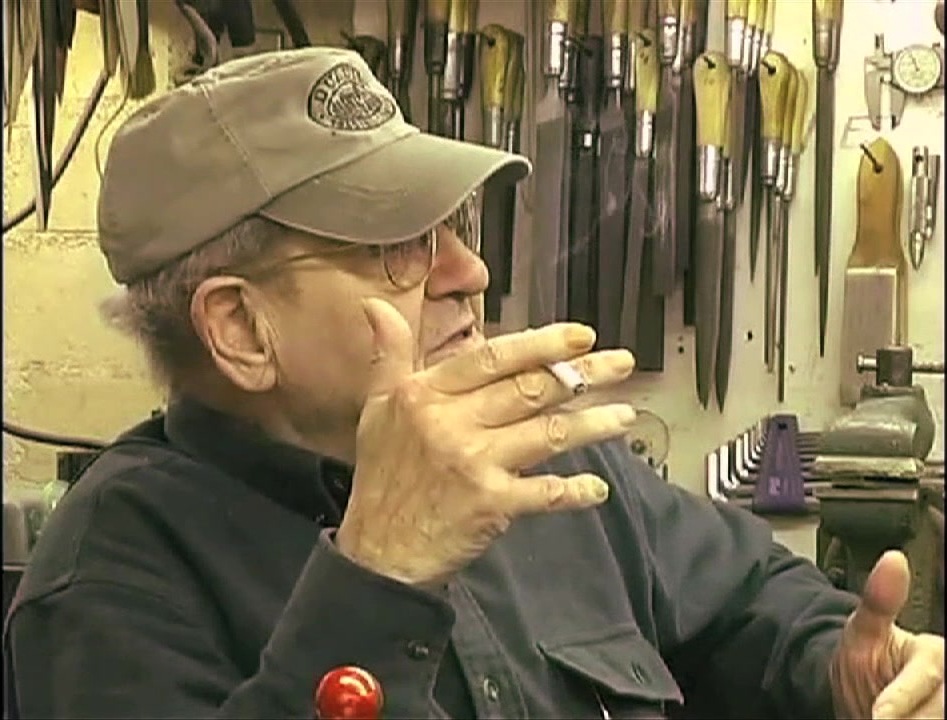
Bob Loveless is widely regarded as the most influential custom knife maker of the twentieth century. He did not invent the hunting knife, but he rebuilt it: the hollow ground drop point hunter he settled on became the most copied knife design in the world, and the way he built a knife became the way the craft is taught. He worked almost entirely alone, refused to make anything but his own designs, and called himself a bench maker rather than a custom maker.
This site is the home of Robert Loveless: An American Legend, the award winning documentary about his life and work. The film was made with the people who knew him best, in the shop where he worked, which is why this page exists: much of what follows is the same story the film tells at length.
The short version
- Full name: Robert Waldorf Loveless, known as Bob Loveless and R.W. Loveless
- Born: 2 January 1929, Warren, Ohio
- Died: 2 September 2010, Riverside, California, of lung cancer
- Known for: the hollow ground drop point hunter, the fully tapered tang, and screw together handle construction
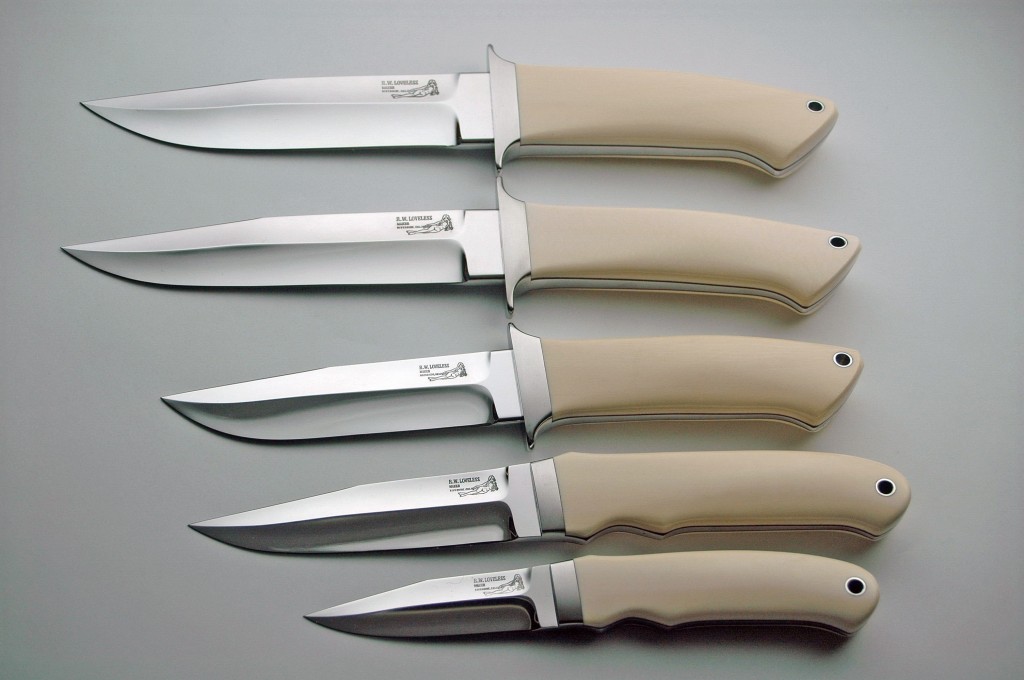
- Blade marking: acid etched, not stamped, reading R.W. LOVELESS, MAKER, RIVERSIDE, CALIFORNIA
- Recognition: founding member and first secretary of the Knifemakers Guild in 1970, its president from 1973 to 1976, and inducted into the Blade magazine Cutlery Hall of Fame in 1985
Warren, Ohio, and a blade forged on a ship
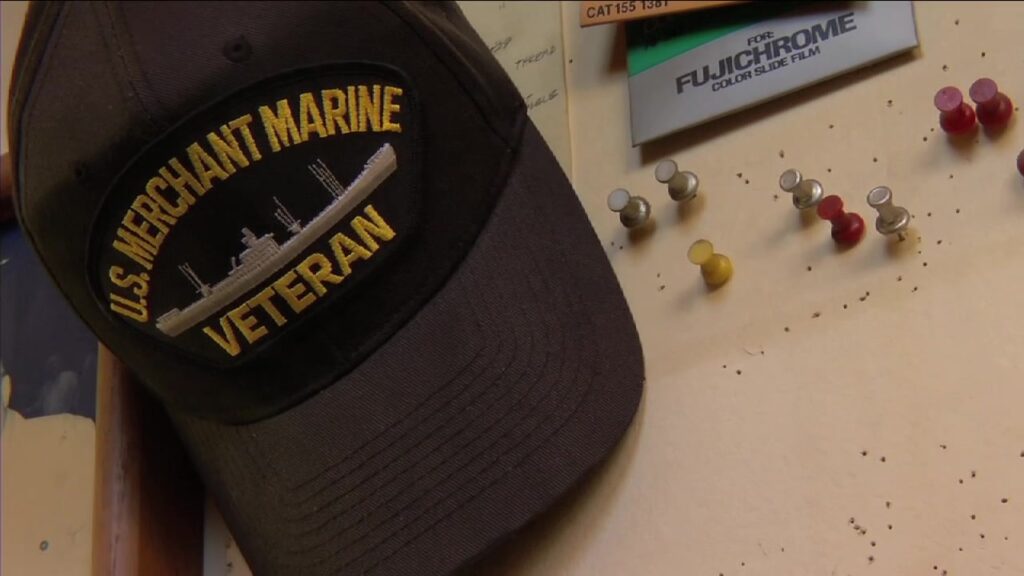
At fourteen he altered his birth certificate to join the United States Merchant Marine. During the war he served as an Air Corps control tower operator on Iwo Jima, and in December 1953 he went back to sea on a tanker working out of New York.
The origin story is a good one because it is so ordinary. On shore leave he went into Abercrombie and Fitch in New York to buy a Randall Made knife, was told the wait was nine months, and decided he would rather make one himself. He ground his first blade from the leaf spring of a 1937 Packard he found in a junkyard in Newark, New Jersey, and forged it on the oil fired galley stove of his own ship.
The Delaware Maids, 1954 to 1960
Abercrombie and Fitch bought the knives he made next. From 1954 to 1960 he produced the pattern he called the Delaware Maids, selling them to the retailer for fourteen dollars each. They became the best selling handmade goods the store carried. The early ones followed Randall’s lead closely. By 1960 he had started doing things his own way, and the work stopped looking like anyone else’s.
What Bob Loveless actually changed
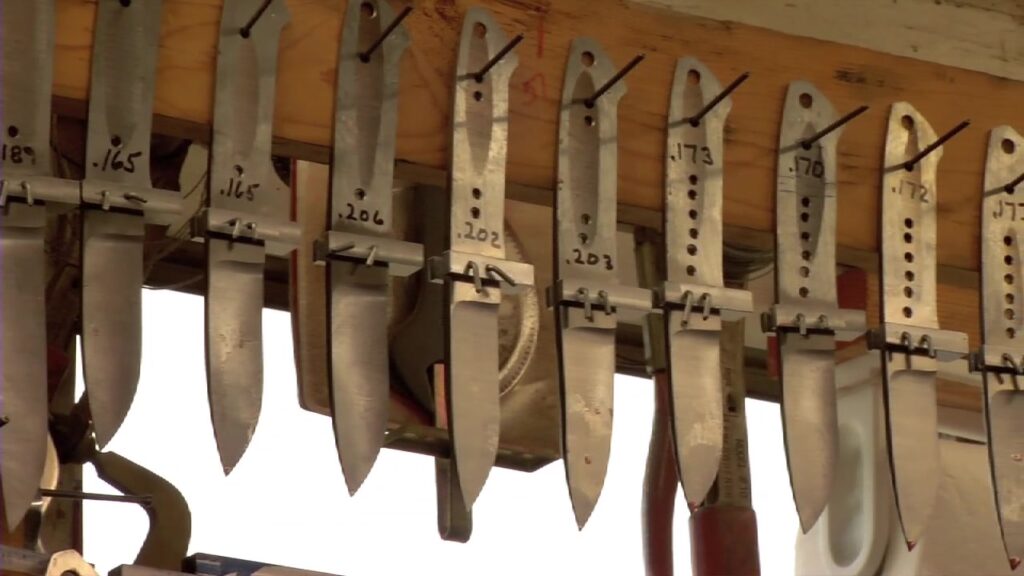
Plenty of makers produce a beautiful knife. Loveless changed how knives are built, and those changes are now so standard that it takes an effort to remember they had an author.
- The hollow ground drop point hunter. A dropped point for control, a hollow grind for an edge that cuts and is easy to maintain. It is the single most copied custom knife design there is.
- The fully tapered tang. Thinning the tang toward the butt takes weight out of the handle without weakening the knife, and shifts the balance forward into the hand.
- Screw together handles. Handle scales fixed with screw type fasteners rather than peened pins, so a handle could be fitted precisely and, if it ever needed to be, taken apart.
- Micarta as a serious handle material. He treated a synthetic as worthy of a knife people would collect, at a time when that was not an obvious position.
- ATS-34 stainless. He introduced the steel to American knifemaking in 1972, and it became a benchmark for years afterwards.
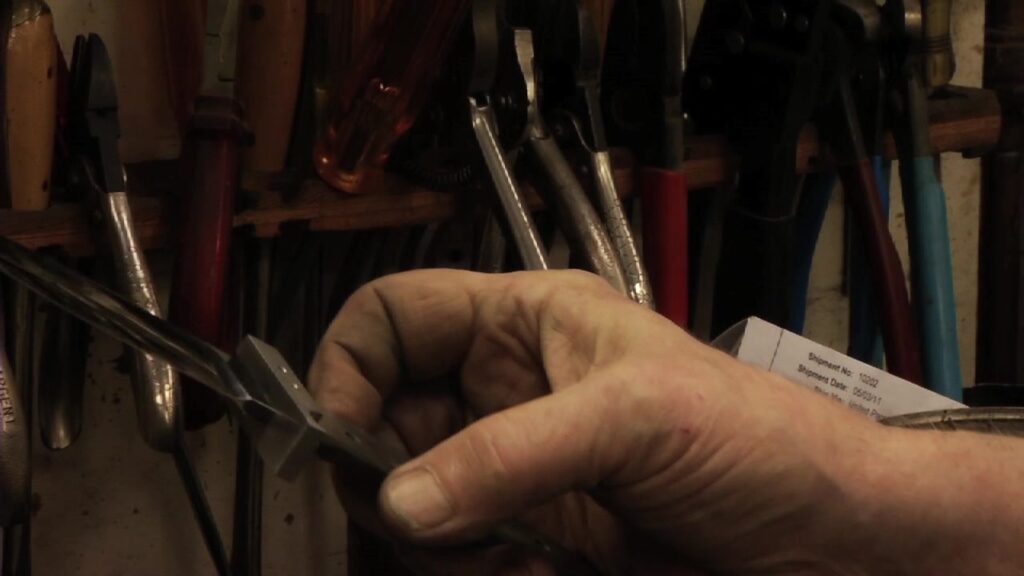
The logo, and why it is etched
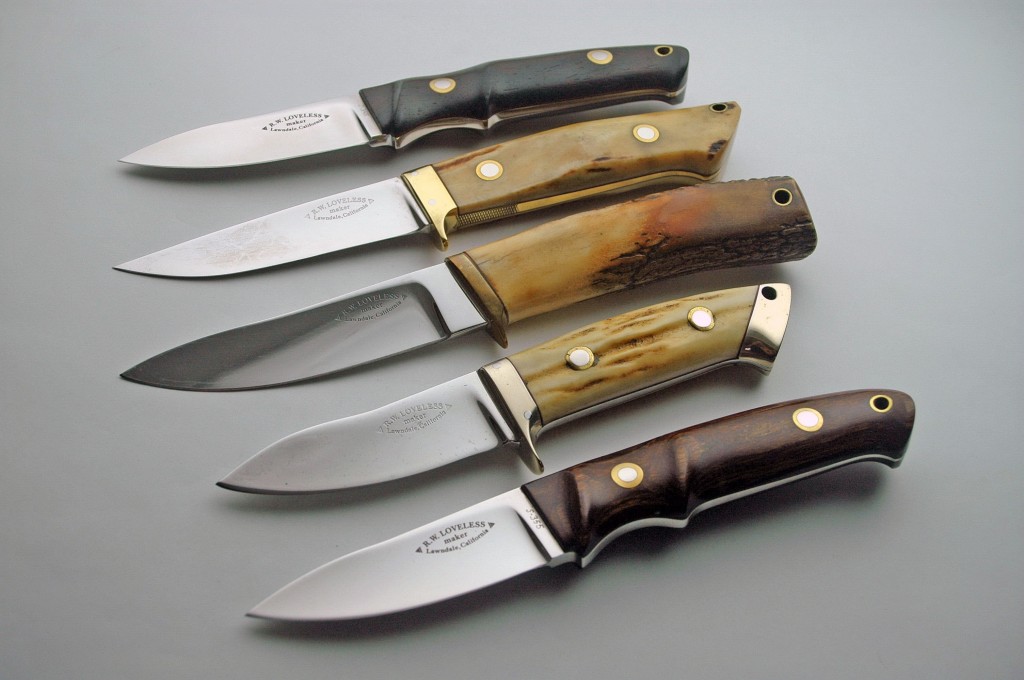
A Loveless blade carries an electro acid etched mark, most familiarly R.W. LOVELESS, MAKER, RIVERSIDE, CALIFORNIA. Some knives carry a Lawndale, California address instead. Many also carry one of his two pictorial marks, the football logo or the reclining nude.
The etching is not decoration and it is not a shortcut. He would not stamp a blade, because stamping drives stress into finished steel and can start a fracture. Choosing a slower marking method to avoid harming the blade is about as clear a statement of his priorities as exists.
The knives people ask about
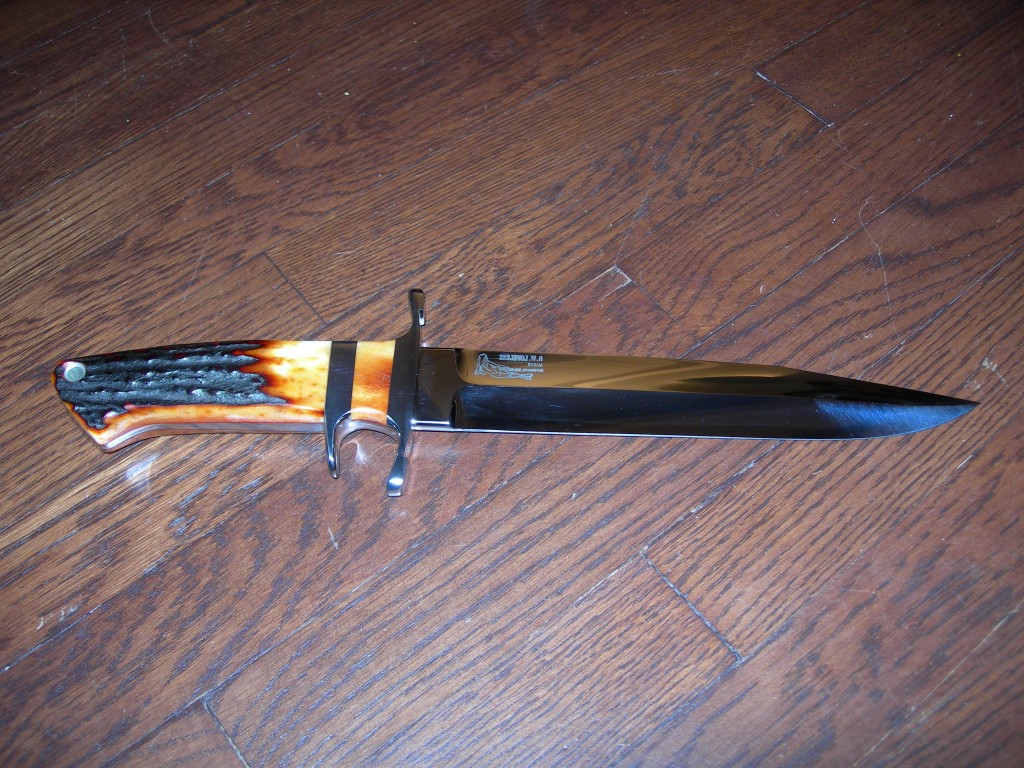
The Big Bear is his large subhilt fighter and the best known of the fighting patterns. Cold Steel has produced a version of it as the Big Bear Classic. A smaller companion, the Junior Bear, was made alongside it.
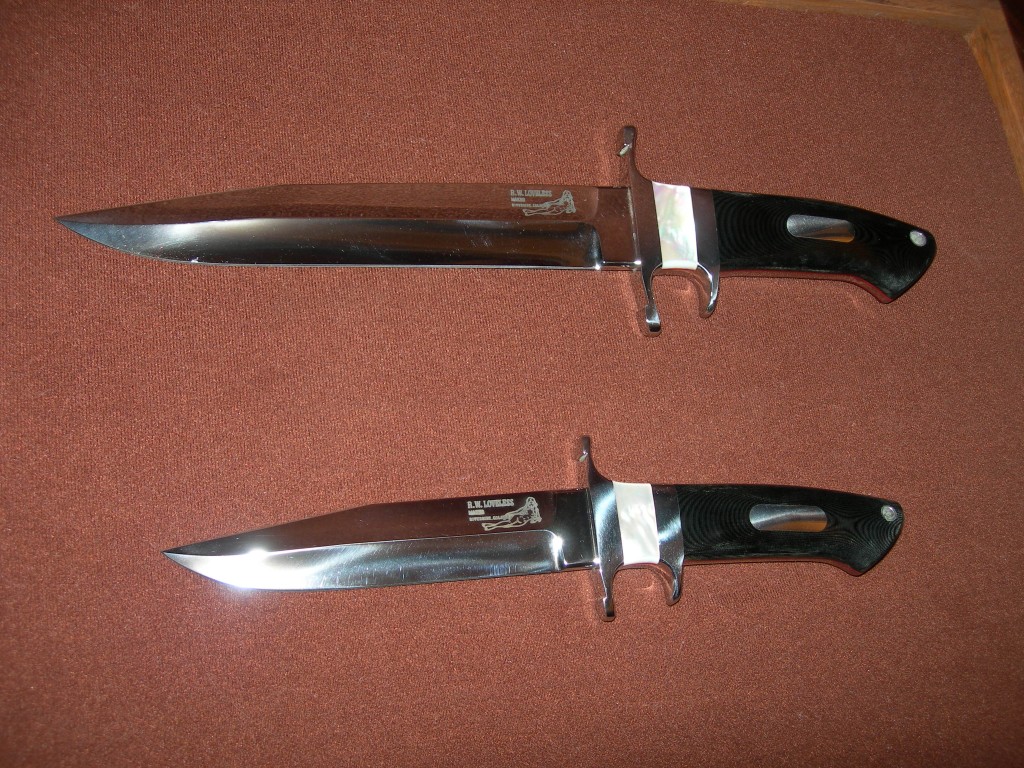
Among the other patterns collectors name most often are the New York Special, the Wilderness and its mini version, the chute knife, the Field and Stream, and various semi skinners and gut hooks. Handle materials run from stag and ivory through to black micarta.
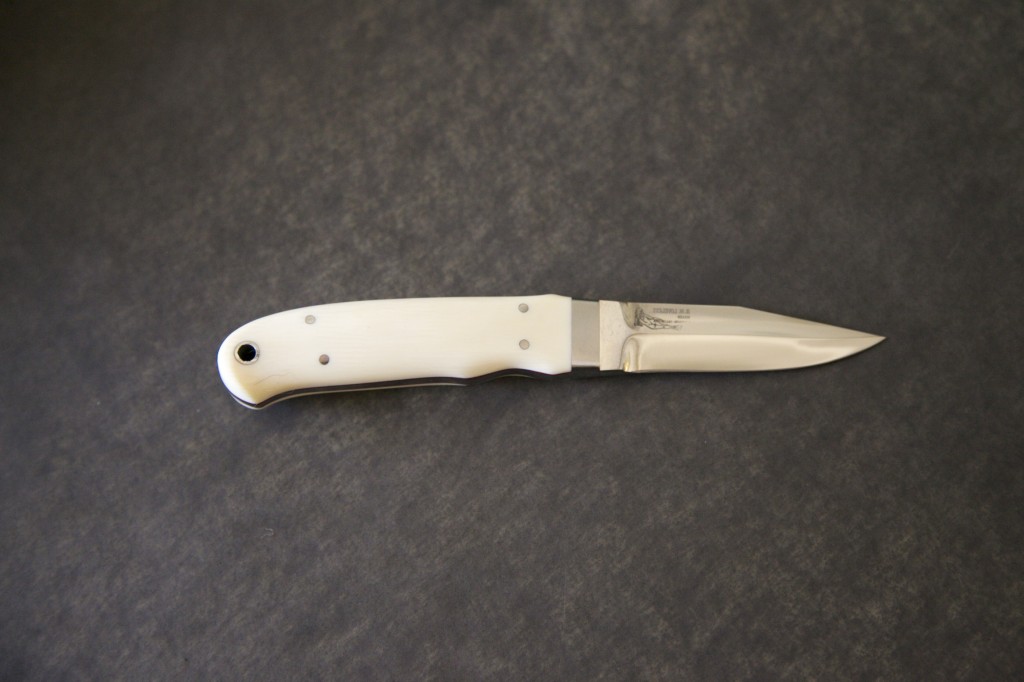
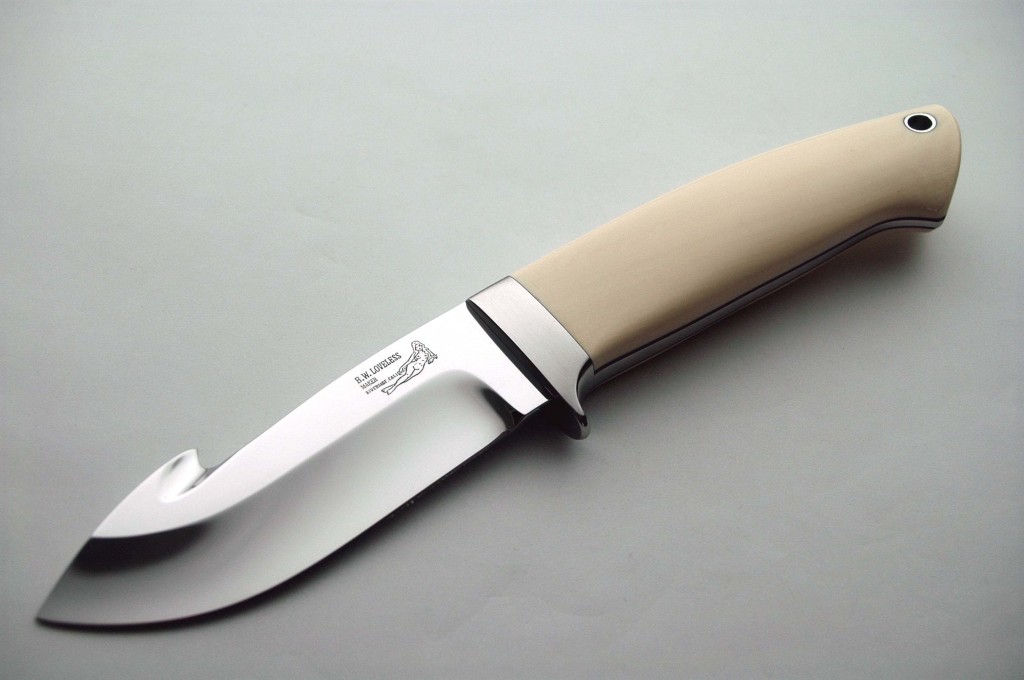
He also designed for manufacturers, which is how his thinking reached people who would never own one of his own knives. He was lead designer at Gerber and drew the Guardian, and he worked with Lone Wolf Knives, Beretta and Schrade Cutlery. He designed for the United States Army Special Forces and for the CIA, including a blade small enough to sit in a passport case.
Fighting knives he would only sell to a buyer who produced police or military identification.
A bench maker, not a custom maker
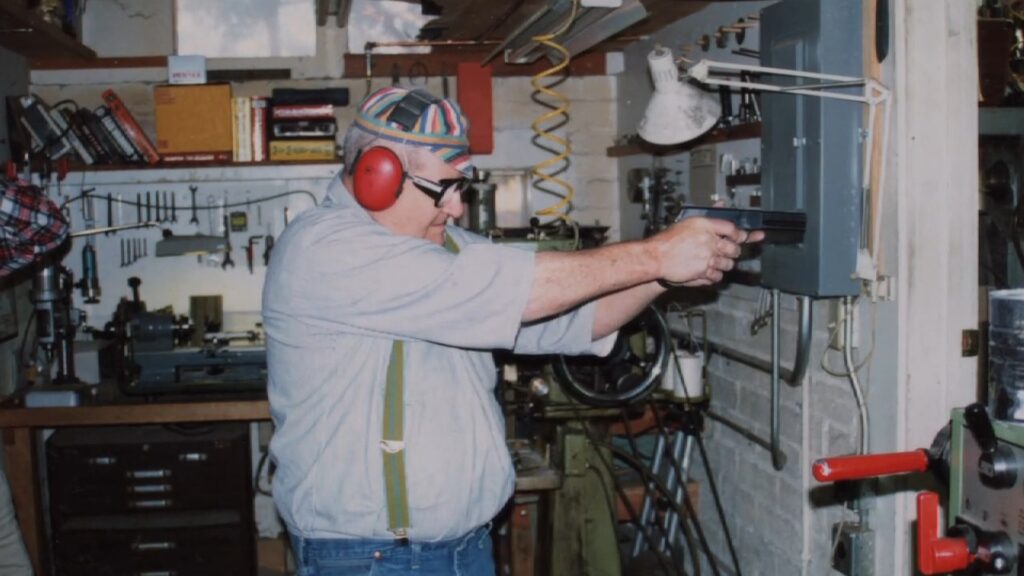
He was firm about the distinction. A custom maker builds what the customer asks for. Loveless made only his own designs and let the buyer choose the handle material, and that was the extent of it. He described himself as a bench maker for exactly that reason.
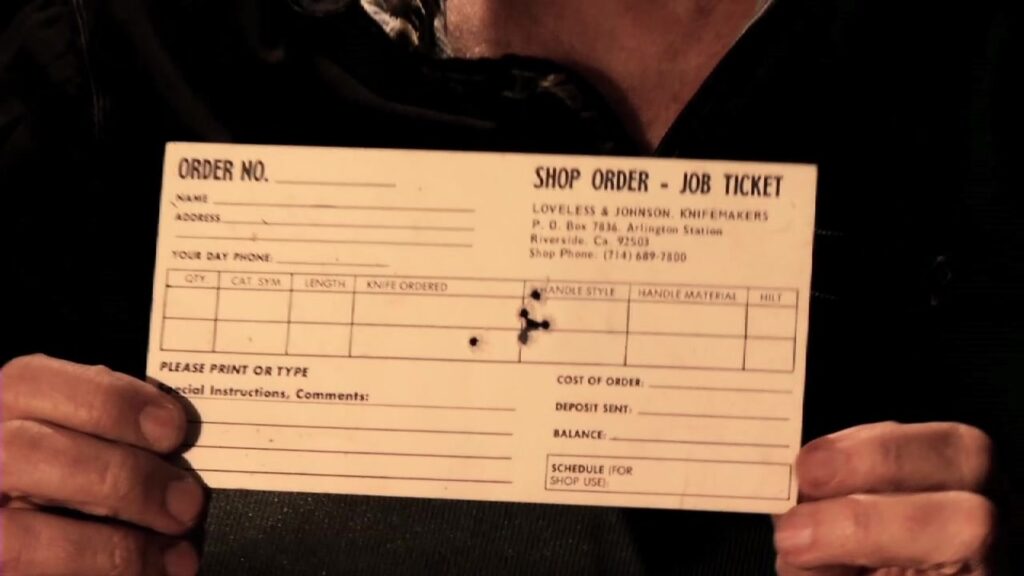
The same instinct shows up in how he worked. He wrote the craft down rather than guarding it, co-authoring How to Make Knives with Richard Barney in 1977, a book a great many makers learned from.
Recognition
He was a founding member of the Knifemakers Guild in 1970 and its first secretary, then served two terms as president from 1973 to 1976. In 1985 he was inducted into the Blade magazine Cutlery Hall of Fame at the Blade Show in Knoxville, Tennessee. From 1993 to 2006 he took part in the Art Knife Invitational.
The people who knew him
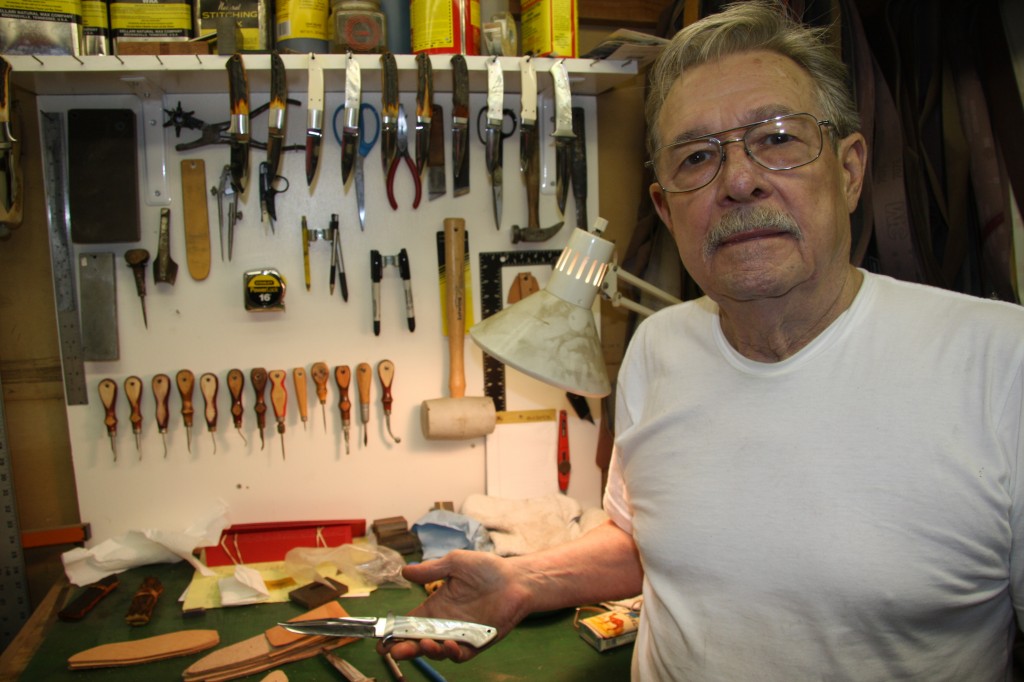
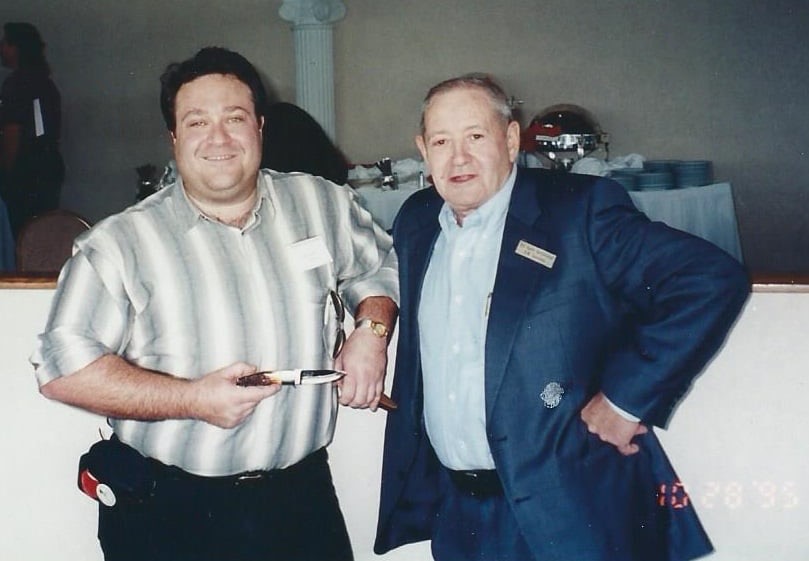
Loveless did not work in isolation forever. Jim Merritt worked alongside him in the shop for many years and appears in the documentary, as do the makers, collectors and dealers who dealt with him over decades. That is the part of the story that is hardest to get from a reference page and easiest to get from the film, and it is why the film was made while the people in it could still tell it.
You can read what audiences and the press said about it, or see the festival run and awards.
Bob Loveless knives for sale
Original Loveless knives change hands regularly and command serious prices. This site does not sell knives. For knives that are actually available, including current pricing, go to Exquisite Knives, the gallery run by Dave Ellis, California’s first ABS Mastersmith and an executive producer of this film. Dave sells more Bob Loveless knives than anyone and knew Bob personally.
Watch the documentary
Robert Loveless: An American Legend is a 76 minute feature documentary, winner of six festival awards including the Gold Remi at WorldFest Houston. For the first time it is available as an instant HD download, alongside the DVD. Get your copy.
Frequently asked questions
When was Bob Loveless born, and when did he die?
He was born on 2 January 1929 in Warren, Ohio, and died on 2 September 2010 in Riverside, California, of lung cancer, aged 81.
What is Bob Loveless best known for?
The hollow ground drop point hunter, which became the most copied custom knife design in the world, along with the fully tapered tang and screw together handle construction that are now standard practice.
What does the marking on a real Loveless knife say?
It is acid etched rather than stamped, and usually reads R.W. LOVELESS, MAKER, RIVERSIDE, CALIFORNIA. Some knives carry a Lawndale, California address. Many also carry the football logo or the reclining nude logo. Because the knives are valuable they are also faked, so buy from a dealer who will stand behind what they sell.
Why did he call himself a bench maker instead of a custom maker?
Because he only made his own designs. A customer could pick the handle material and nothing else.
Was he in the Cutlery Hall of Fame?
Yes. He was inducted in 1985 at the Blade Show in Knoxville, Tennessee.
Is there a documentary about Bob Loveless?
Yes. Robert Loveless: An American Legend, directed by Jack Lucarelli and David Bartlett and executive produced by Ed Wormser and Dave Ellis. It is available as an HD download or on DVD from this site.
See the whole story on film
Robert Loveless: An American Legend is the 76 minute documentary about Bob Loveless, made with the makers, collectors and friends who knew him best, and filmed in the shop where he worked. Winner of six festival awards including the Gold Remi at WorldFest Houston.
Instant HD download $14.99, or the DVD for $19.95 plus shipping.